
Before leaving for my Erasmus internship in Gothenburg, I didn’t know what to expect and was constantly looking for information on the Internet. After coming back from what was an amazing experience, I decided to write the article I would’ve wanted to read at the time, hoping it will help someone in the same situation as I was.
Finding accommodation
Finding a place to stay was the hardest part of my Erasmus experience. If you’re going to study at the University of Gothenburg, you might be assigned to student accommodation. If not, ask for help from your receiving institution and start looking for a room as soon as possible. Be prepared to spend at least 4000 SEK a month for rent and don’t be scared of living a bit outside the city centre. The only areas I was told to avoid were Biskopsgarden, Bergsjon and Angered. Of course, beware of scams and don’t send any money unless you’ve seen the apartment or you are absolutely sure you can trust the landlord.
Blocket is the most popular website for accommodation searching, but it’s in Swedish, so you might need a translation add-on. Other websites I’ve checked include qasa, findroommate and housinganywhere. Some Facebook groups you can join are Find accommodation in GOTEBORG!, Expats in Gothenburg and ERASMUS GOTEBORG. Airbnb is also a valid option, as is staying in a hostel while you search for better accommodation.
Getting to Gothenburg
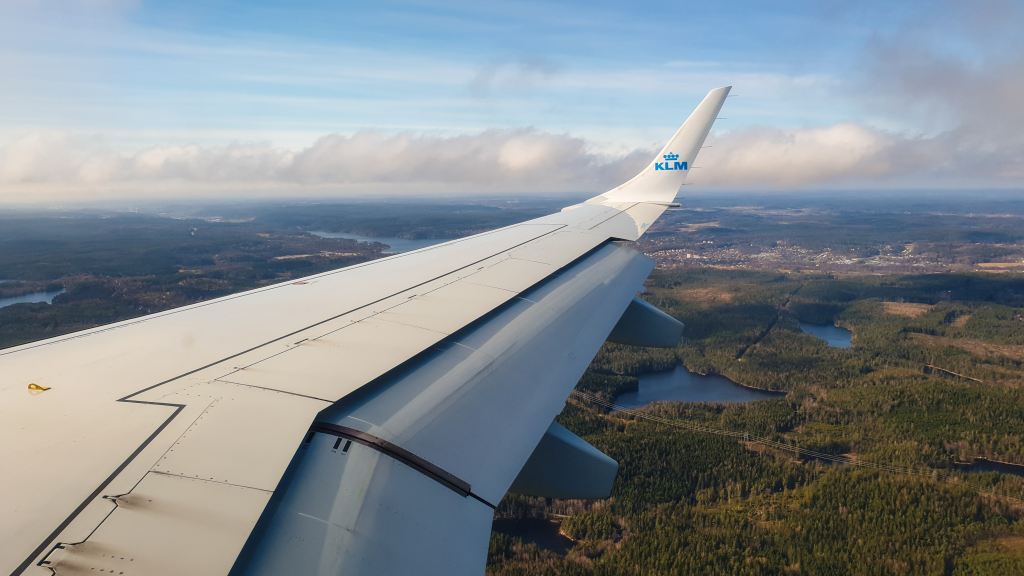
The most common way for Erasmus students to arrive is by plane, as Gothenburg Landvetter airport is well connected to most European cities. Using an app like Skyscanner to get an idea of plane fares might be useful, but remember to always double-check on the company’s website and to add the checked suitcase you’ll probably need to carry. To get the best deal, try not to book too close or too far from the departure date – one month before should be fine.
Once you arrive at the airport, you’ll want to reach the central station in order to get on the means of transport that will take you to your new home. You have three options to do so. The easiest – but most expensive one – is the Flygbussarna. The rides are very frequent and you can buy the ticket online or at the airport. A cheaper option is Flixbus, but you’ll need to book in advance and pray your flight is not delayed. The cheapest but least practical option is to take the 612 bus route to Landvetter Travel Center and then the Rod Express to Nils Ericson Terminalen, the central bus station.
Getting around Gothenburg

Gothenburg has amazing public transport managed by Vässtrafik. There are numerous lines of trams and buses that connect the city centre to its surroundings, as well as trains departing frequently from Centralstationen. During weekdays, trams and buses usually arrive at the stops every five minutes, while at the weekend the waiting time is of fifteen minutes. To check hours, stops and lines you can use Google Maps or, even better, one of the following apps: Vässtrafik To Go and Reseplaneraren. Both help you located the nearest stop and are constantly updated with delays and changes to the routes. On Vässtrafik To Go you can also buy tickets online if you need to. However, you might want to get a period ticket as soon as possible, as it’s cheaper if you’ll be using transportation a lot (and you will, I can assure you that). The price varies depending on which area of the city you live in, as the further you go from the centre the more expensive it becomes.
Eating and drinking
Eating out in Gothenburg is not for all pockets. There’s nothing wrong with treating yourself once in a while, but expect to spend a lot of money unless you go to a fast-food chain (my favourite one was the Swedish MAX). I once spent 20 euros for a pizza Margherita and a glass of wine, which, being Italian, nearly caused me a heart attack. If you want to try local food at a cheap price, you can always go to Ikea.
Buying groceries can be quite expensive too, especially if you want to buy fresh fruit and vegetables, which are mostly imported. There are many supermarket chains in town, the cheaper being Netto and Lidl. Willys is still cheap but usually has more choice. I’ve also been to Hemköp a few times and it was fine, while I’ve never been to Coop or ICA as I was told they were a bit expensive. Two things that surprised me about supermarkets were the lack of translations from Swedish – thank you for everything Google Translate – and the huge sweets section near the checkout.
Something you might want to know is that you won’t find any alcoholic beverage at the supermarket, at least not above 3,5%. There’s a dedicated type of store for that, owned by the state and called Systembolaget, which has a lot of options but – guess what – slightly expensive prices. Also, it’s closed on Sunday and closes very early on Saturday, so you’ll need to plan your drinking sessions. Remember to bring your ID card, as you have to be at least 20 in order to shop there. If you’re with friends, they’ll need to show their IDs too.
Free time

One of my favourite places to spend the free time was the pub Henriksberg, where you can play pool or shuffleboard for free before 8 pm – but it’s affordable even afterwards. Of course, you need to buy at least a drink and manage to find a free table. Another pub I went to was the King’s Head in Andra Långgatan, which hosts all-you-can-eat buffets every weekend. Andra Långgatan and the surrounding area are full of pubs where beer prices are usually okay.
If you’re a party animal, you should head to the area around Avenyn, where many nightclubs are located. Note that in some places the age of admission can be 23 or even 25, so be sure to check in advance to avoid unpleasant surprises. You might want to check for prices too, as they can be quite high or there can be free entry before a certain hour. As for me, I’ve only ever been to Yaki-Da and Valand, which were fine.
During winter, the weather is not great – cold, windy and rainy – but it’s not hard to find something to do indoors: there are bowling centres, ice skating rinks, escape rooms, spas, the Nordstan shopping centre and many interesting museums, my favourite ones being the Gothenburg Museum of Art and the Universeum, a big science centre. In the afternoon, don’t forget to stop by a café for the Swedish tradition of Fika, which consists of a warm beverage accompanied by a sweet treat and good company. Haga is a picturesque quarter in Gothenburg, lined up with cosy cafés like Café Husaren, where the city’s biggest cinnamon buns are served.

During summer, the city livens up and there is a wide choice of outdoor activities to do. For instance, you can take a leisurely stroll in the Botanical Gardens or in the park Slottskogen – which also encompasses a zoo and a minigolf. Another option is to hike around the lake Delsjön, where you can also organise a kayaking session or a barbecue. At the supermarket, you’ll find disposable barbecues, which have to be thrown in dedicated bins to be found in many green areas. Gothenburg also has a beautiful archipelago to explore, divided in a northern and a southern part. You won’t need a special ticket to hop on the ferries at Lilla Varholmen or Saltholmen, as they’re part of the city’s transportation network. I’ve only been to Styrsö, the biggest island of the southern archipelago, which was very beautiful and varied, but I wish I had seen more. Another unmissable place in Gothenburg for fun-seekers is Liseberg, one of Scandinavia’s most loved amusement parks. It’s open only during summer and in the months of November and December.
Last but not least, Gothenburg is located in a strategic position, not far from Oslo, Copenhagen and Stockholm, so organizing a trip to at least one of these Scandinavian capitals is a must. Olso and Copenhagen are well served by Flixbus, while the fastest way to go to Stockholm is by train (either with SJ or MTR). If you want to explore even further, you can plan a trip to Swedish Lapland or one to the Norwegian Fjords, which I didn’t see but are on my bucket list for the future.
 The Travelling Robin